
AI Room Planner
Generates interior design concepts and floor plans from room photos using AI.
Are you the owner?
Claim this tool to publish updates, news and respond to users.
Sign in to claim ownership
Sign InDescription
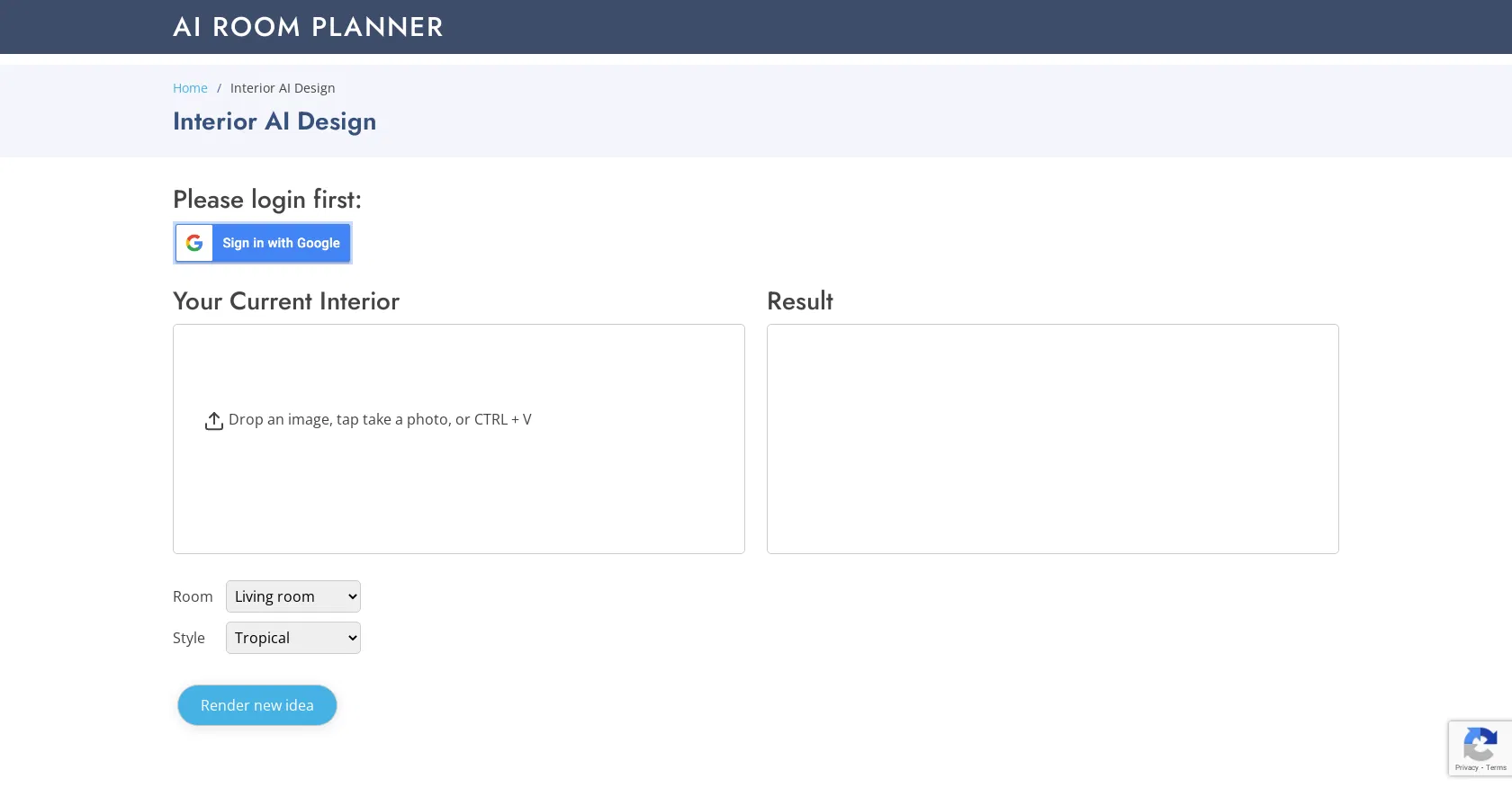
AI Room Planner is an online tool that transforms photos of existing rooms into new interior design concepts and professional floor plans. Developed to democratize interior design, its core value lies in allowing anyone to visualize and experiment with different styles and layouts instantly, eliminating the need for expensive software or professional consultations at the initial ideation stage. It provides a fast, intuitive starting point for any redesign project.
Key features: the tool can upload a photo of any room and apply over a dozen different design styles, from modern and Scandinavian to industrial and bohemian. It automatically generates a corresponding 2D floor plan from the uploaded image, complete with measurements and furniture placement. Users can then further customize these generated designs by adjusting colors, materials, and furniture items. The platform also offers a virtual staging feature to furnish empty rooms and provides high-resolution renders suitable for presentations.
What sets it apart is its specific focus on architectural understanding; the AI is trained to recognize room dimensions, windows, doors, and existing furnishings to create coherent and spatially accurate redesigns. It operates entirely online via a web browser, requiring no software installation, and is optimized for use on both desktop and mobile devices. The underlying technology combines computer vision for image analysis with generative adversarial networks (GANs) to produce photorealistic after-images, making the results highly tangible and convincing for decision-making.
Ideal for homeowners and renters looking to renovate or redecorate their living spaces without prior design experience. Real estate agents and property stagers can use it to virtually furnish listings and create compelling marketing materials. Interior design students and hobbyists find it valuable for rapid prototyping and style exploration, while small architecture and design firms can leverage it for quick client presentations and initial concept development, significantly speeding up the early phases of a project.